
How the USSR promoted the ‘friendship of peoples’ (PHOTOS)
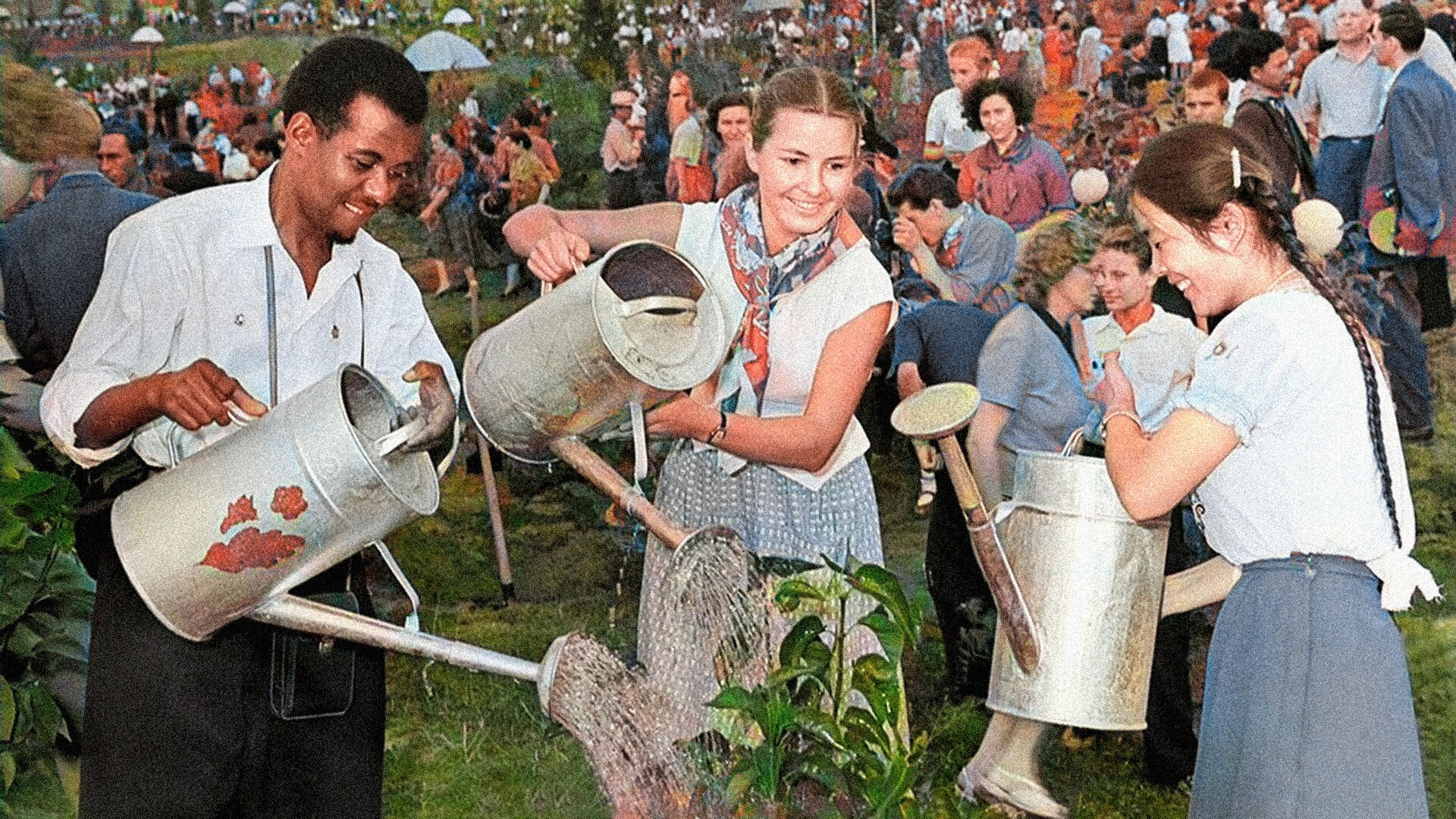
The ‘friendship of peoples’ was one of the supports upon which the multinational Soviet Union rested. Unity and equality were embedded into this phrase, as well as cooperation and mutual help, goodwill and common interests, collaborative work, the freedom and independence of all peoples of the USSR. All together they made up the monolithic Soviet people.

As a national idea, the ‘friendship of peoples’ in the USSR gained utmost importance during the Great Patriotic War. The ‘friendship of peoples’ – in other words, international unity – was declared one of the keys to the USSR’s military success, when the citizens of all republics had to rise to defend their mutual home. Soviet propaganda, through cinema and journalism, poems and prose, appealed to the ‘friendship of peoples’ and their combat brotherhood.

After victory in World War II, the ‘friendship of peoples’ became one of the fundamental notions in Soviet society. It didn’t presuppose the assimilation of the peoples into a single nation. On the contrary, it insisted on internationalism – a multinational community.
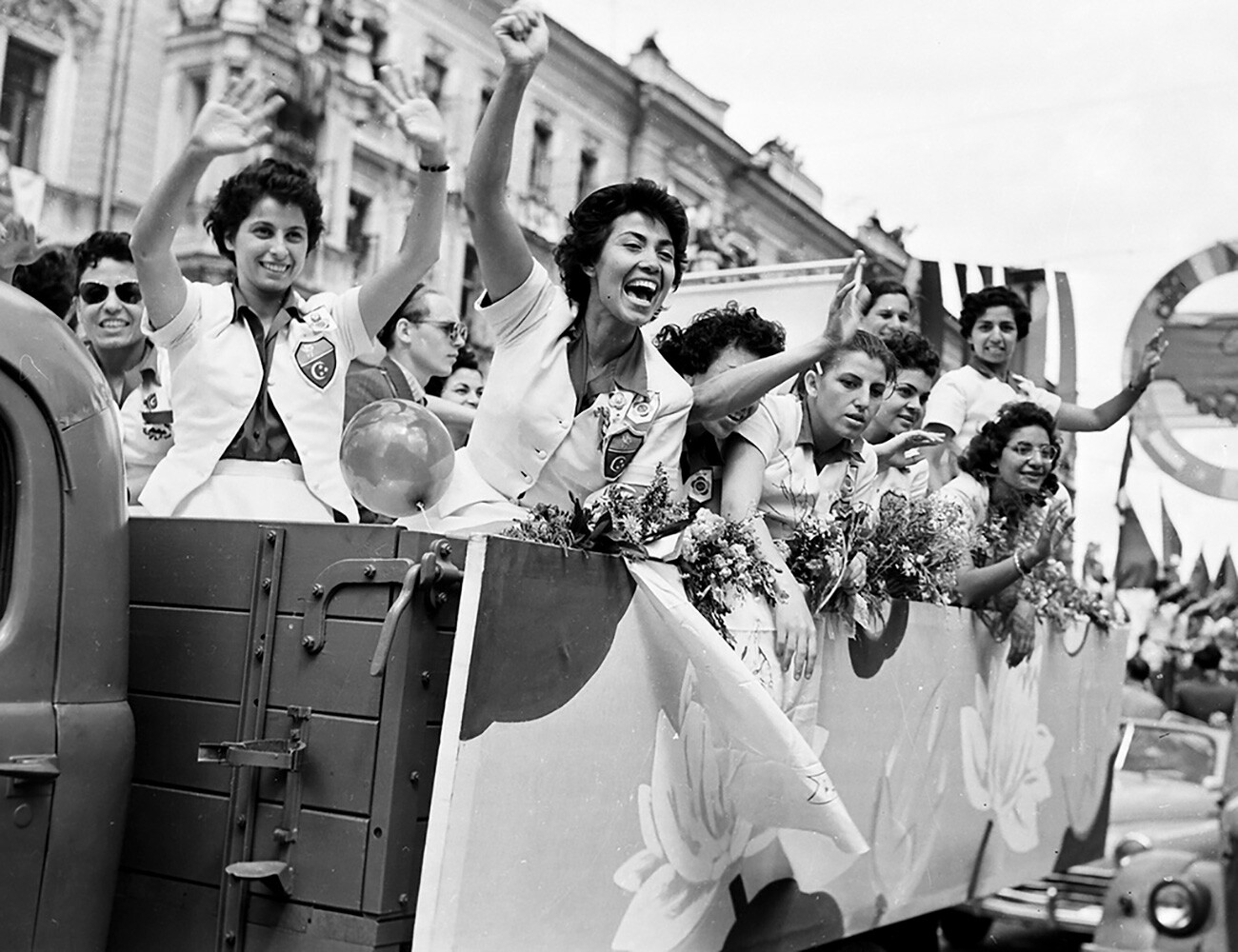
With that, the friendship of peoples was not limited to just the Soviet Union. It acquired a global character: the USSR actively built friendly relations with many countries in the world – first of all, with those with a socialist development model.
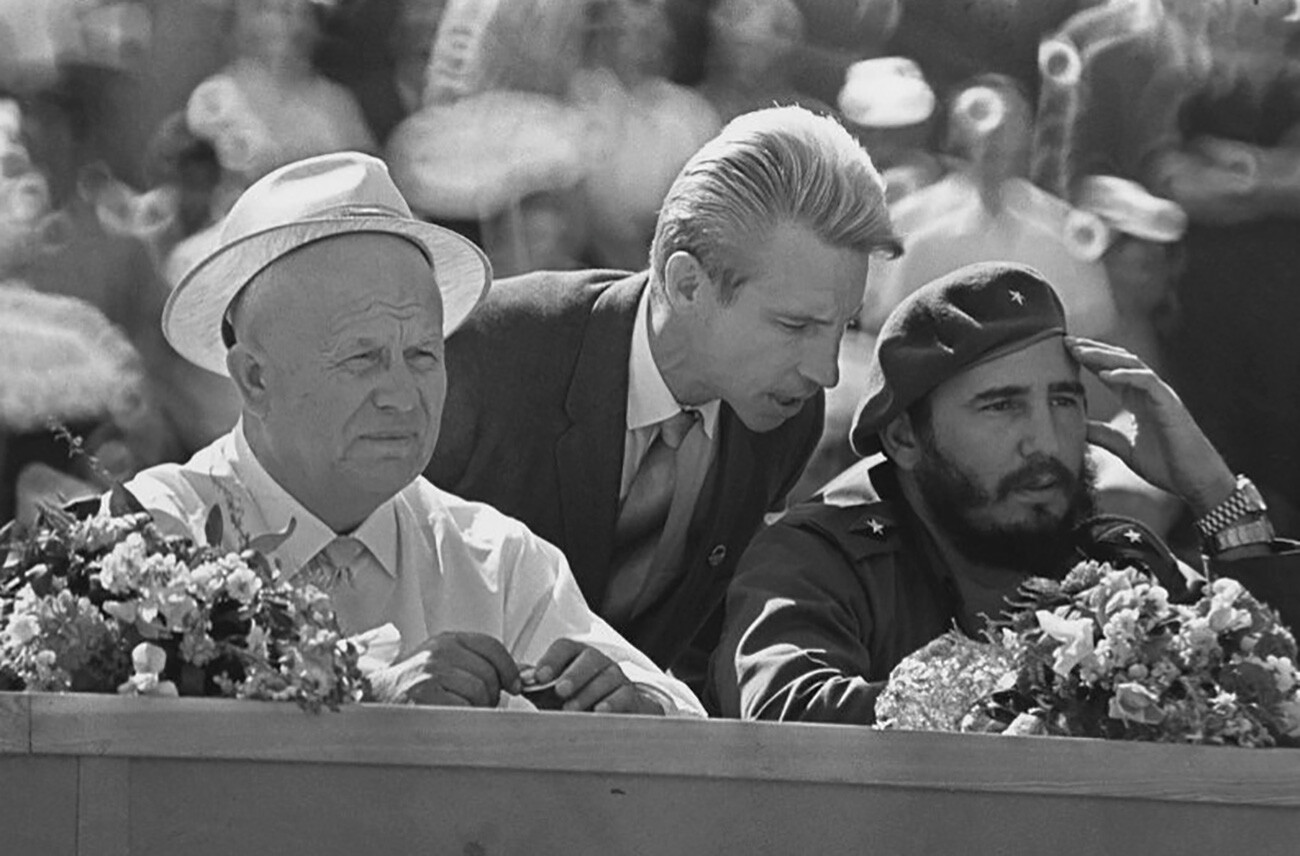
For example, in 1957, Moscow hosted the VI World Festival of Youth and Students, which went under the slogan: “For peace and friendship”. Delegates from 130 countries participated in it.


Of course, it was important to reinforce the key social idea for the USSR everywhere. It was immortalized in street and square names, in the names of scientific and cultural institutions, in state symbols and awards.

The Soviet Anthem
At the end of 1943, the Communist Party approved the State anthem of the USSR. Sergei Mikhalkov was the author of the text, Alexander Alexandrov authored the music. In particular, its first chorus had the following lines:
“Be glorified, our free Motherland,
Reliable stronghold of the people's friendship!”
From 1956 onward for 20 years, the anthem’s words were not sung because they mentioned Stalin. In 1977, the text was changed, removing the mention. However, the ‘people’s friendship’ stayed. Moreover, now, this phrase was sung three times – according to the number of chorus repeats:
“Be glorified, our free Motherland,
Reliable stronghold of the people's friendship!
The Party of Lenin – the strength of the people,
Leads us to the triumph of Communism!”
Friendship of Peoples Fountain at VDNKh
This grand fountain was created in 1954 for the opening of the Exhibition of Achievements of National Economy. Initially, there were plans to name it ‘The Golden Sheaf’, but, in the end, it was dedicated to this key social idea.
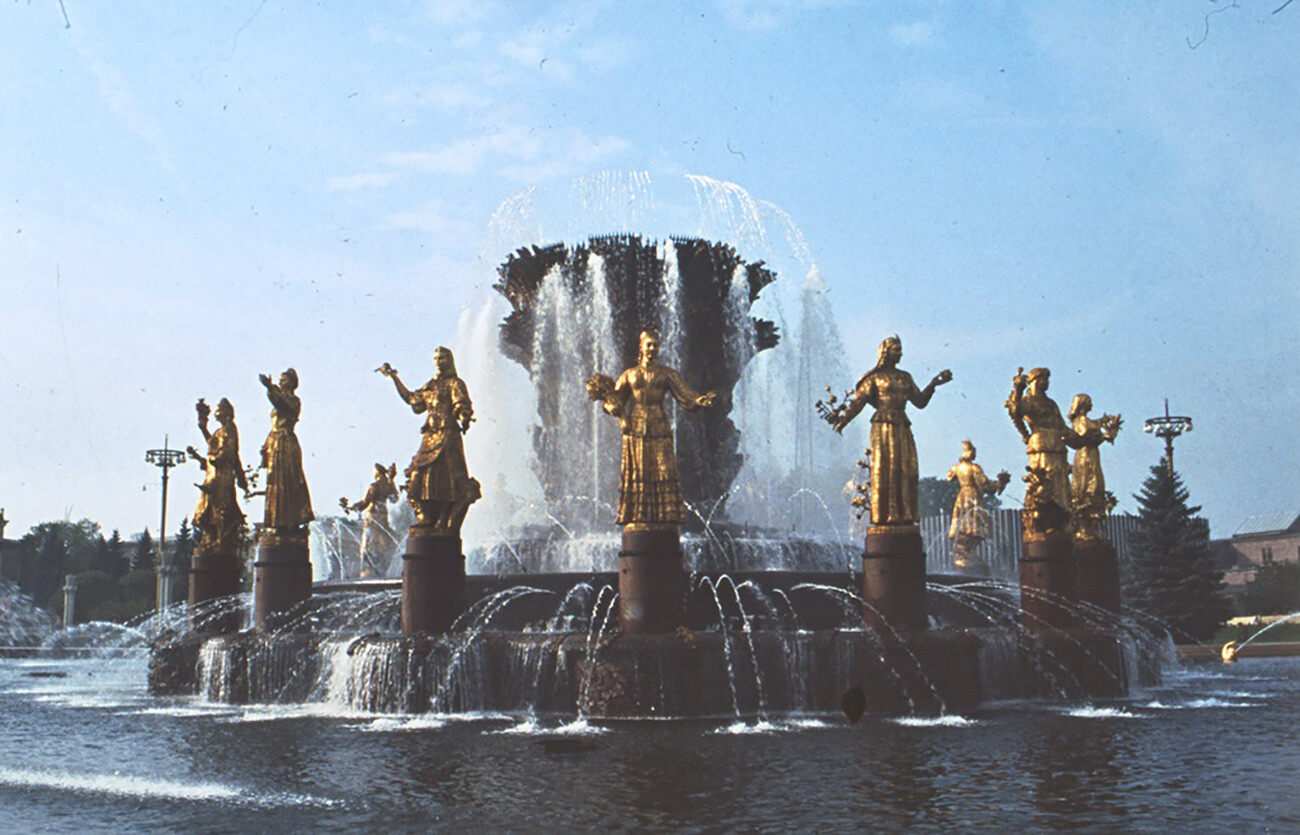
A sheaf of wheat and sunflowers, surrounded by female figures in national dresses, is depicted in the middle of the fountain. There are 16 of them – according to the number of Soviet republics in 1954.

Peoples’ Friendship University (the modern Patrice Lumumba Peoples’ Friendship University of Russia, RUDN University)
This university was founded in Moscow in 1960 to provide help to the countries of Asia, Africa and Latin America, which shook off colonial rule at the turn of the 1950s-1960s.
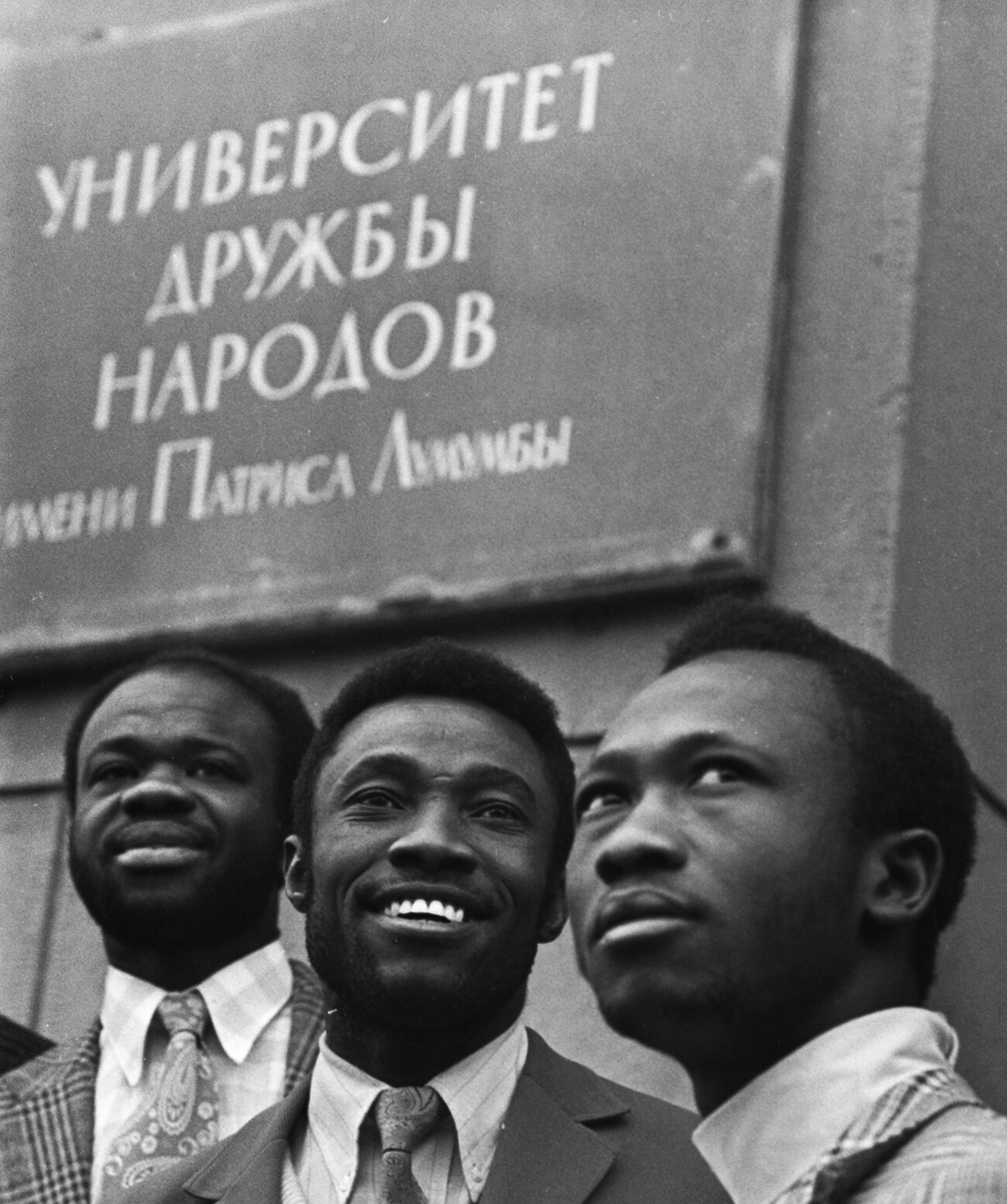
In 1961, the university was named after Patrice Lumumba – the first prime minister of the Democratic Republic of the Congo.

Its first alumni were 228 specialists from 47 countries. In 1975 the university was awarded the Order of Friendship of Peoples.
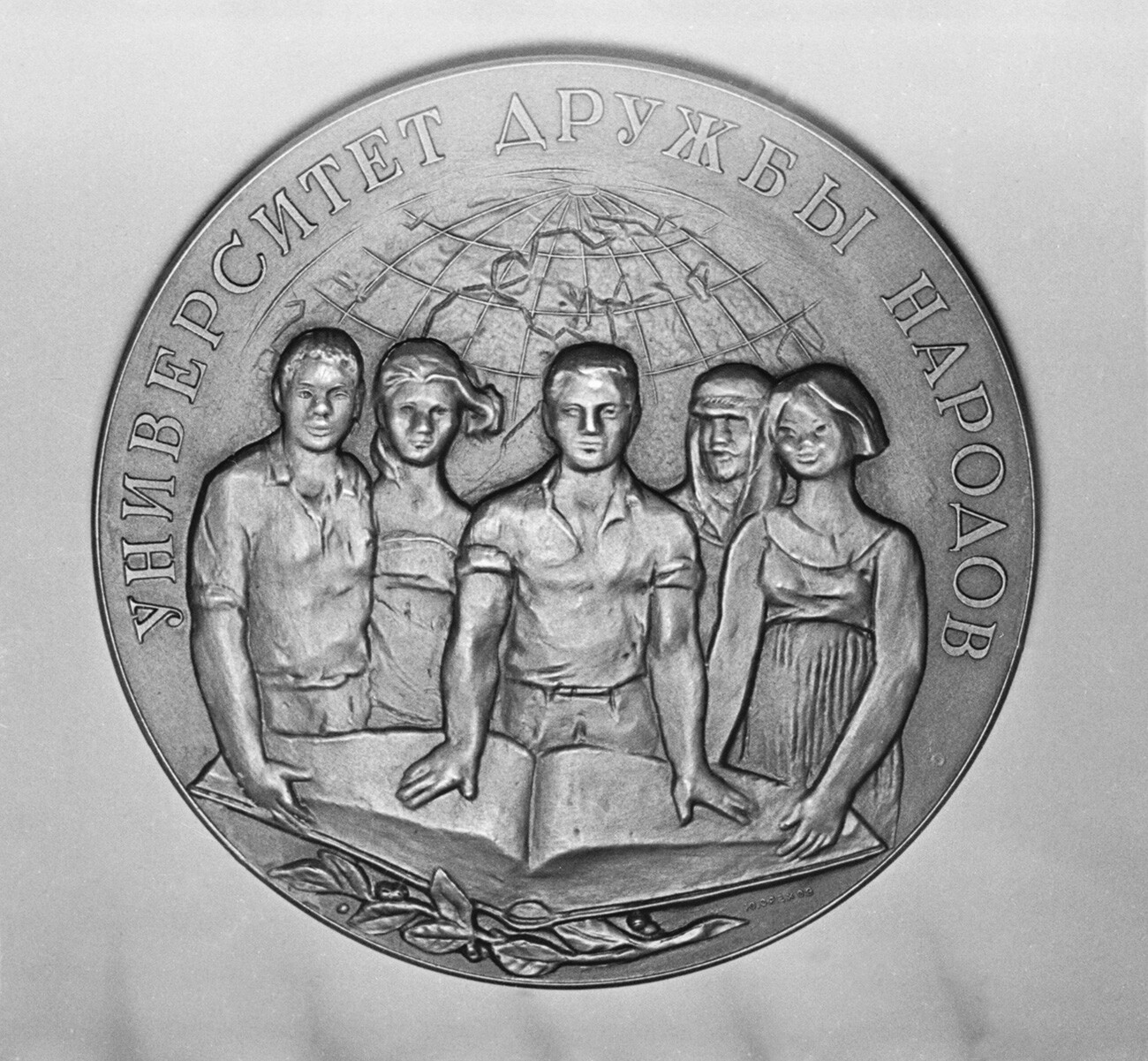
The Order of Friendship of Peoples
This award was founded in 1972 for the 50th anniversary of the creation of the USSR. First of all, it was awarded for merits in bolstering the friendship and fraternal cooperation of socialist nations and peoples.
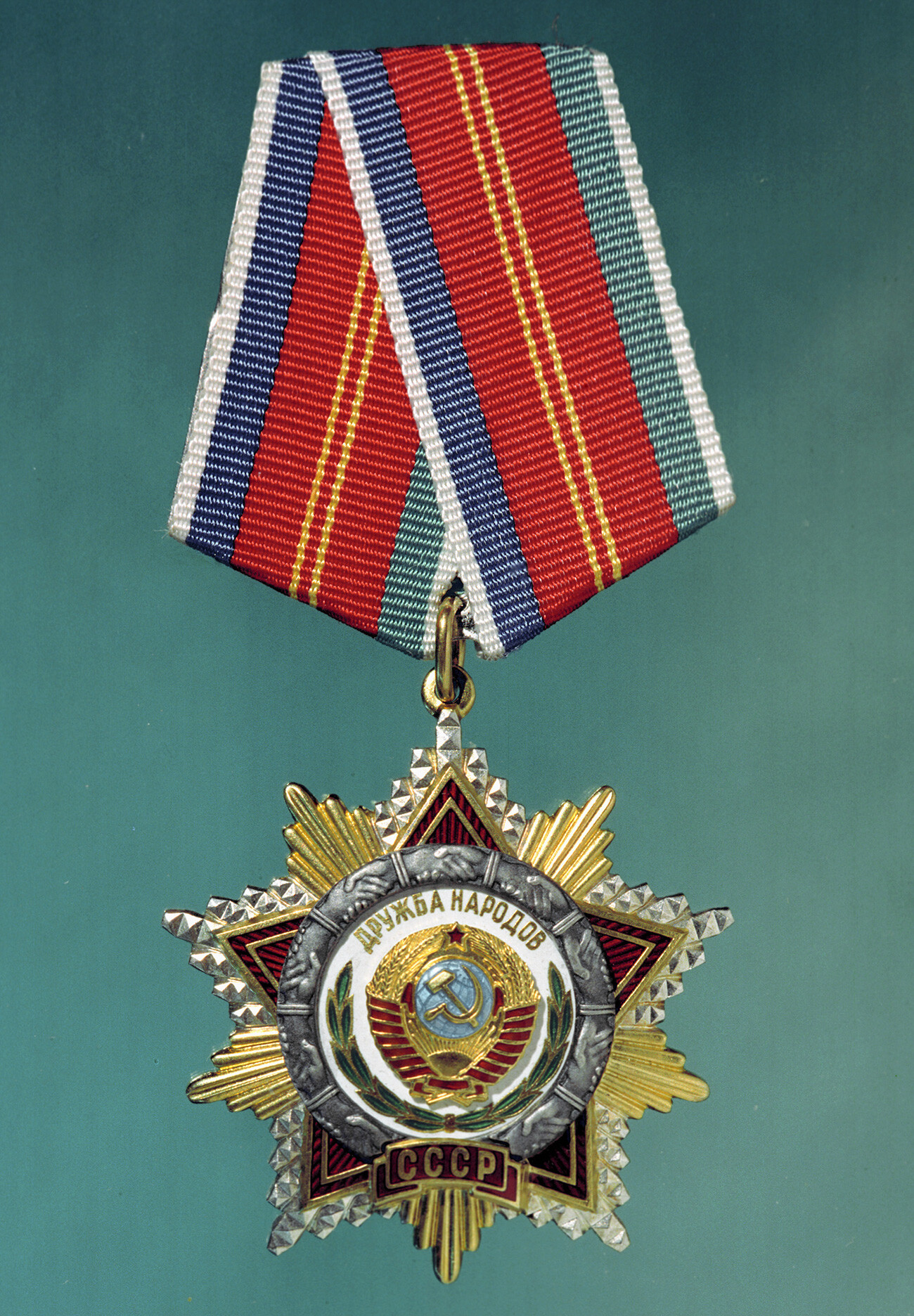
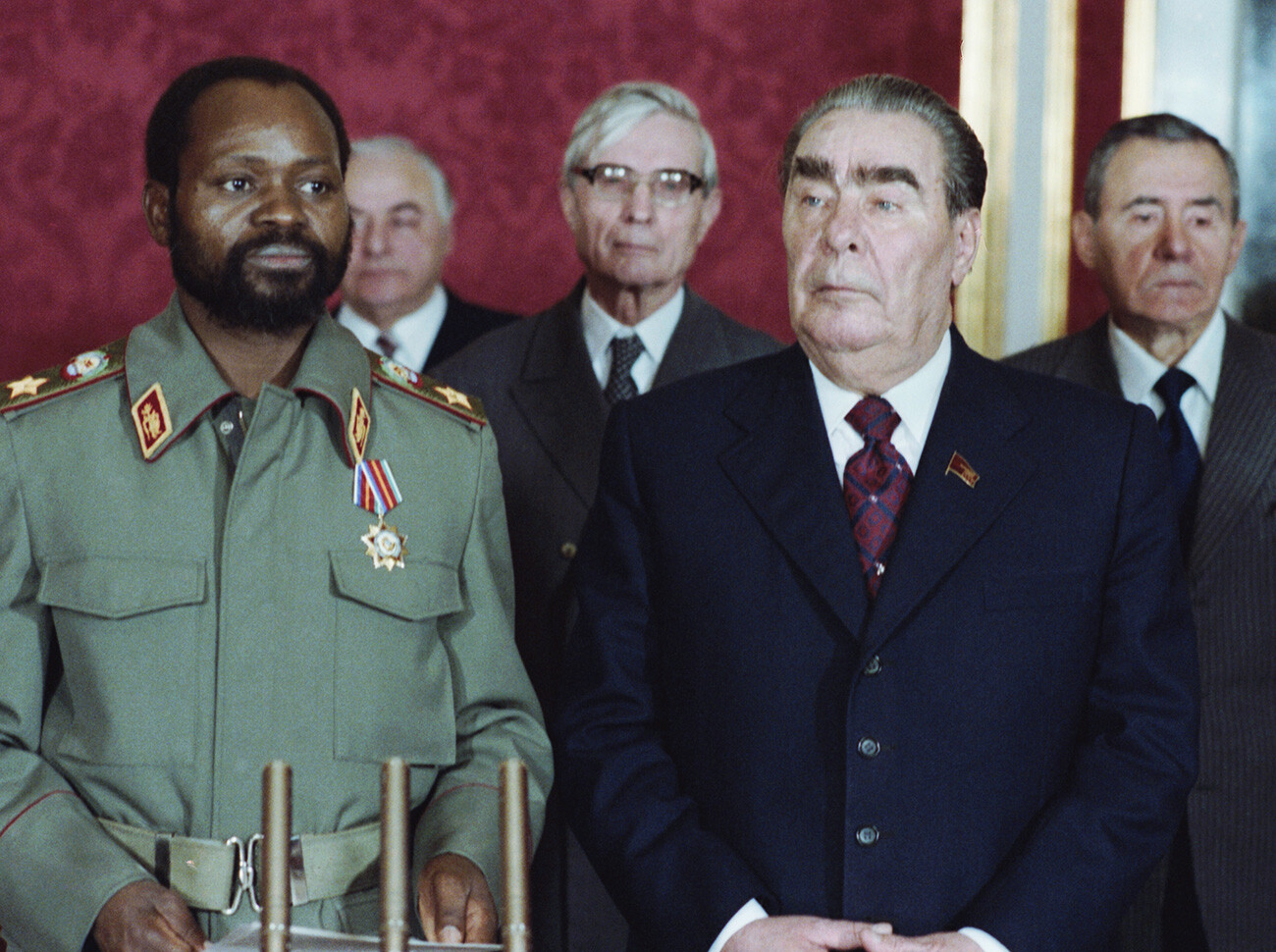
The order’s recipients were not just regular citizens, but also foreigners, as well as enterprises and organizations, newspapers and universities, regions and cities.
Toponyms & objects across the country
Large and small objects dedicated to the friendship of peoples existed not just in Moscow, but also in many Soviet republics and the republics of the RSFSR.

In some places, those were mosaic murals and monuments, in other places – settlements, avenues and streets, hydroelectric power plants and metro stations, concert halls and museums.