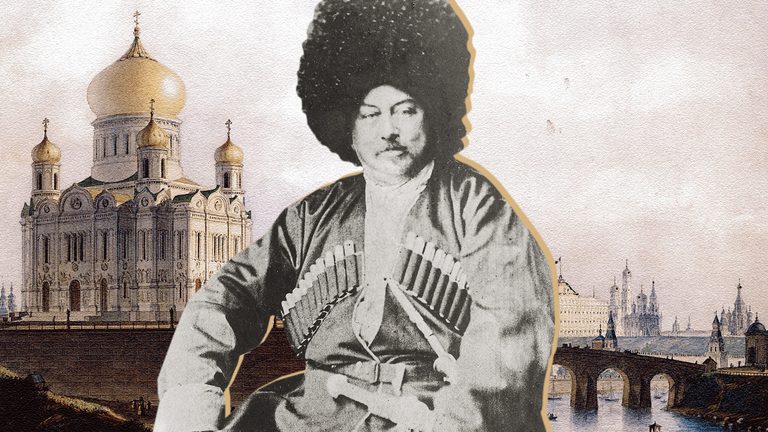
How a Russian revolutionary became head of the Hawaii Senate
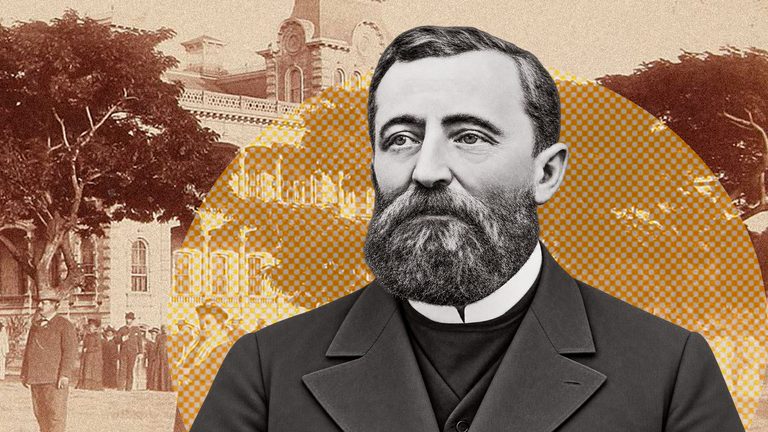
Nikolai Roussel dreamed of relocating all the Russian inhabitants of Alaska to Hawaii. Washington, however, was not at all enthusiastic about this plan.
Nikolai Sudzilovsky, a doctor, decided to dedicate his life to the struggle for socialism while still a student. He joined underground organizations and took part in protests and riots. While working as a medical assistant at a prison hospital, he attempted to organize an escape for the inmates – an act that forced him to flee Russia.
In exile, Sudzilovsky adopted the name Nikolai Roussel. He met Karl Marx, participated in the Bulgarian war of liberation against Ottoman rule, helped organize the socialist movement in Romania and lived in both Greece and the United States. In 1892, the restless agitator moved to Hawaii, where he became a successful plantation owner and provided free medical care to the native population, while also introducing them to socialist ideals. They dubbed him ‘Kauka Lukini’ – the ‘Russian Doctor’.
In 1898, the archipelago was annexed by the United States, which granted the islanders a degree of self-governance. Russel enjoyed great popularity among the local population and, in 1901, he was elected the first president of the Hawaii State Senate. In this position, he campaigned for the native inhabitants to be granted full political rights and freedoms and he initiated the large-scale construction of schools and hospitals. His boldest proposal was to relocate Russian settlers from Alaska – which Emperor Alexander II had sold to the United States in 1867 – to Hawaii. "From now on, Russian America shall be here!" Roussel declared.
Such bold and daring policies alarmed Washington. That same year, through a combination of political maneuvering and bribery, the Americans succeeded in forcing his resignation. Disillusioned, he moved to China, where he dedicated himself to scientific work until his death in 1930, leaving behind a wealth of valuable studies in medicine, ethnography, chemistry, biology and agronomy. He rejected any offers from Soviet officials to return to his homeland.